Pick a mask
that actually seals.
Everything that matters when you choose a diving mask — fit, lens type, internal volume — explained plainly, then matched to the right Sopras range for scuba, technical and freediving.
across 3 ranges
& silicone skirts
if a mask will leak
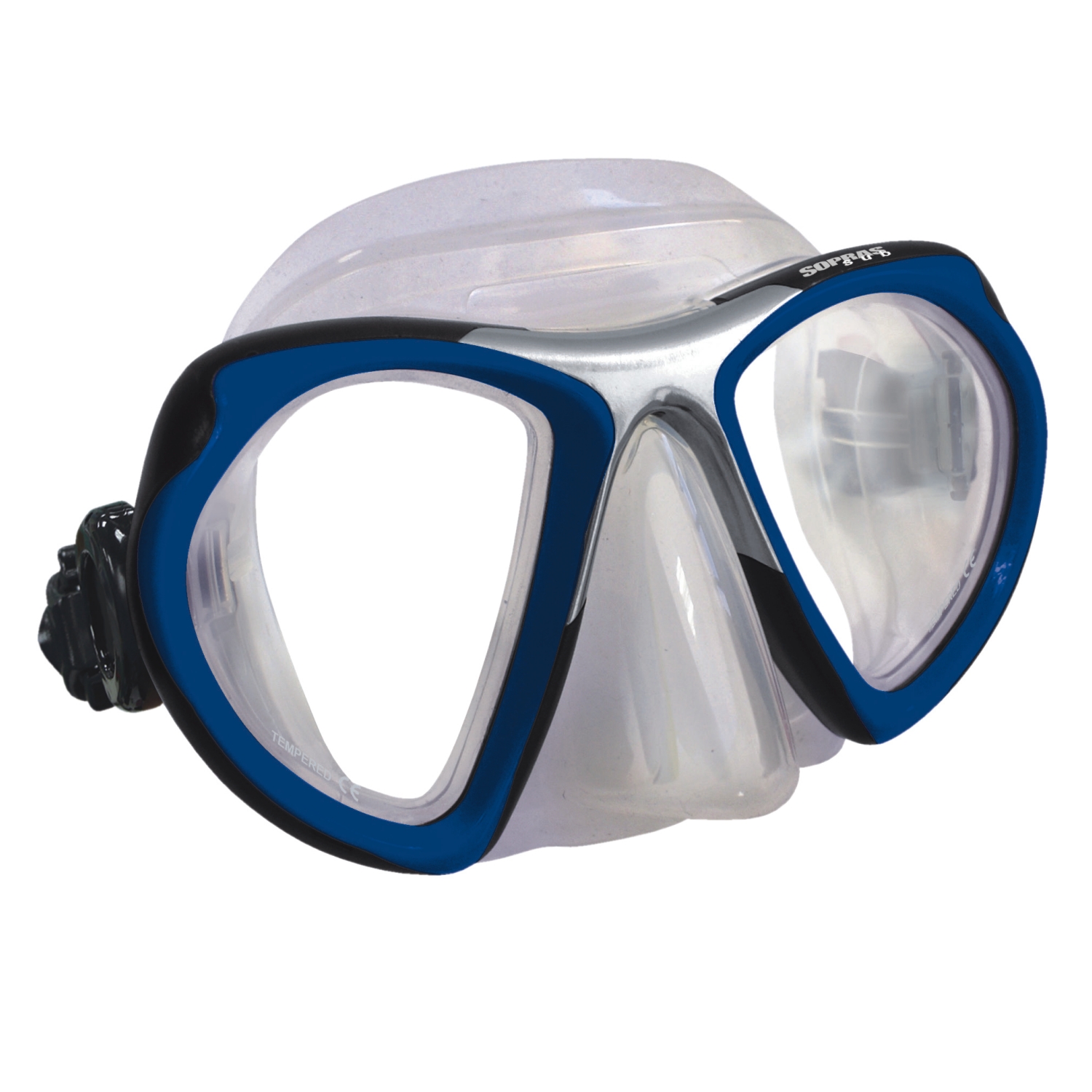
A mask is only as good as its seal on your face.
Lens count, frame material and volume are real differences — but they come second. No two faces are alike, and a mask that seals beautifully on one diver leaks on another. The good news: you can predict a leak in 30 seconds, before you ever get wet.
Does this mask fit you?
- Hold the mask to your face — strap off, not behind your head.
- Look up slightly and inhale gently through your nose.
- Let go of the mask. Don’t hold your breath.
Single, twin, multi-window or low-volume goggle
The lens layout decides your field of view, whether you can fit prescription lenses, and how the mask behaves at depth. Here’s what each one is genuinely good at.
Single-lens
One continuous pane, no centre bar. The widest unbroken view — favoured for photo/video. Generally can’t take prescription inserts.
Twin-lens
Two framed lenses with a nose bridge. The recreational standard — rigid, reliable, and the lenses can be swapped for prescription optics.
Multi-window
Side panels add peripheral light and a more open feel. Some come with a purge valve for hands-free clearing.
Low-volume goggle
Minimal air space, no nose pocket. Almost effortless to equalise — built for pool apnea and experienced freedivers.
One maker, three dive worlds
Sopras builds masks for three distinct kinds of diver. They share the same core — tempered glass lenses, silicone skirts — but the geometry, volume and strap systems are tuned to the discipline. Pick the world you dive in.
SoprasSub
Scuba and snorkelling. The broadest line-up — single, twin and multi-window masks for everyday recreational diving and warm-water travel.
- Occhio
- Frameless Star II
- Curiosa
- LUCIDA Alu
- Visual
- Potente · purge
SoprasTek
Technical, wreck and cave diving. Low-volume frameless masks that fold into a pocket as a backup, plus rugged framed and aluminium options.
- Frameless Tek
- Shadow Frameless
- Larga
- Corona
- Metal · alu frame
SoprasApnea
Freediving and spearfishing. Low-volume masks with liquid-silicone skirts for easy equalising, plus minimal-volume goggles and camo models.
- Barracuda
- Chiara
- Phantom
- Sferica goggle
- Murena II · camo
What do you dive? Here’s where to look.
Make a new mask clear — and keep it that way
First-dive prep & care
Common questions
Single-lens or twin-lens?
Single-lens gives the widest unbroken view; twin-lens lets you fit prescription lenses. If you wear glasses and don’t use contacts, go twin-lens.
Why does my mask still leak?
Usually an over-tightened strap (it distorts the skirt), hair caught under the seal, or a shape that doesn’t match your face. Re-run the fit test before blaming the mask.
What does “low volume” actually do?
Less air between lens and face means less effort to equalise and clear. A real advantage for freediving; marginal for scuba, where the regulator gives you plenty of air.
Can I freedive with a scuba mask?
Yes, but a purpose-built low-volume mask is easier to equalise and less air-costly at depth. For pure pool apnea, a low-volume goggle goes further still.
Read deeper
Plain-English articles on getting the fit, the view and the defog right.
How to test a diving mask before you buy it
The suction test, the leak points to check, and why a tight strap is the wrong fix.
Single vs twin-lens masks: which view is right for you?
Field of view, prescription options, and what photographers actually choose.
Stop your mask fogging: the new-mask prep that works
Why new masks fog, the toothpaste method, and defog that lasts a whole dive.
Start from how you dive — the right mask follows.
Recreational, technical or breath-hold: pick your world and browse masks built for it. Every model uses tempered glass and a silicone skirt — the rest is fit.